
by Voxintech-admin@2022 Voxintech-admin@2022

IP65 vs IP67 Limit Switch: Which Protection Rating Should You Choose?

IP65 vs IP67 Limit Switch: The Key Difference

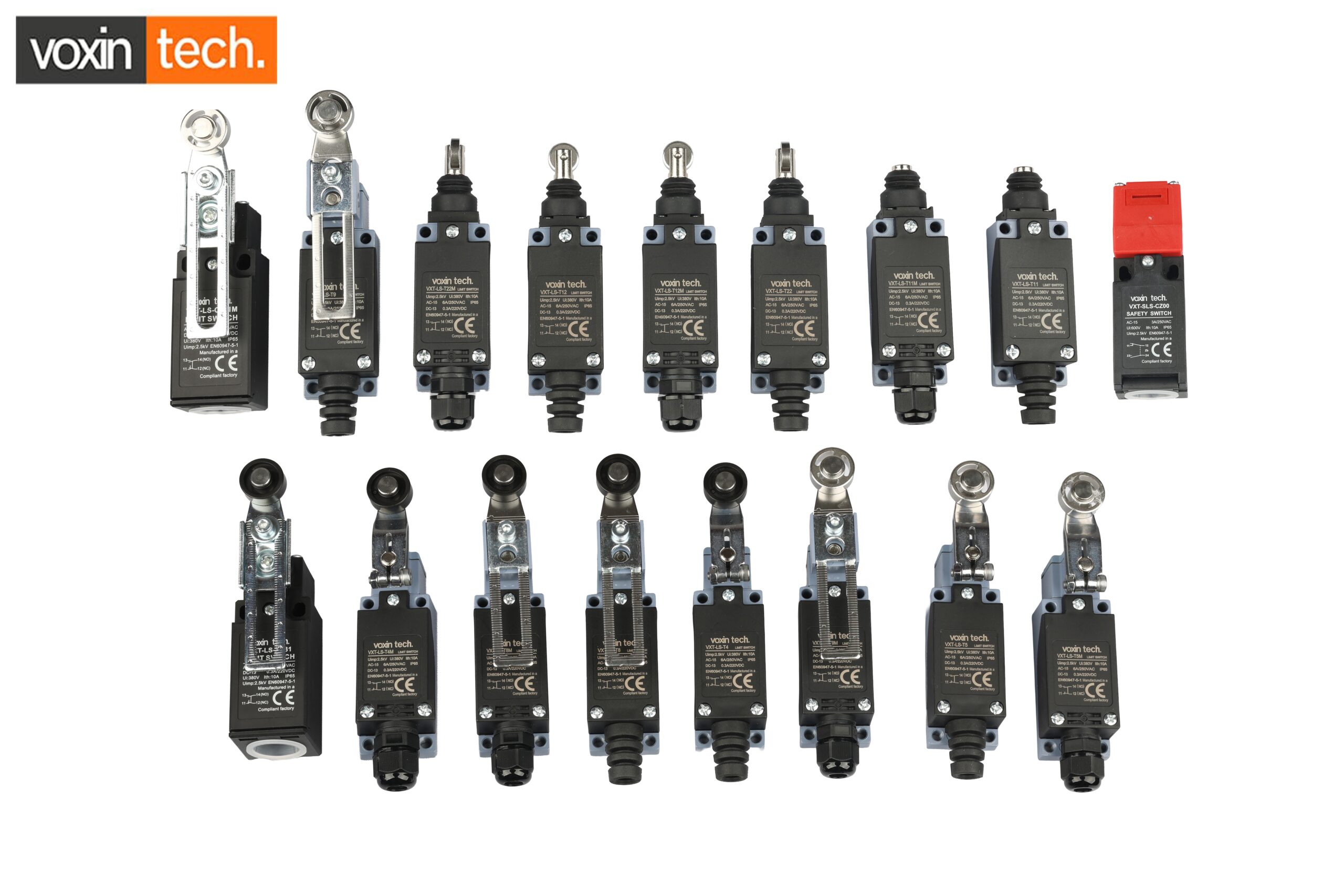
Choosing between an IP65 and an IP67 limit switch comes down to one question: how much water will the switch face? Both ratings are fully dust-tight, so the deciding factor is whether your switch must survive water jets (IP65) or temporary immersion (IP67). Specifying the wrong one means either paying for protection you don’t need, or — worse — installing a switch that fails when moisture gets in. This guide makes the choice simple.

Understanding the IP Code

The IP (Ingress Protection) rating from IEC 60529 has two digits. The first describes protection against solids (dust), the second against liquids (water):

  • First digit “6” — completely dust-tight (no dust ingress). Both IP65 and IP67 share this.
  • Second digit “5” (IP65) — protected against low-pressure water jets from any direction.
  • Second digit “7” (IP67) — protected against temporary immersion (up to 1 m deep, 30 minutes).

So the only difference between IP65 and IP67 is the level of water protection.

IP65 vs IP67 at a Glance

Feature IP65 Limit Switch IP67 Limit Switch
Dust protection Dust-tight Dust-tight
Water protection Low-pressure water jets Temporary immersion (1 m / 30 min)
Withstands washdown Light wash / splash Heavy washdown
Survives submersion No Yes (temporary)
Typical environment Dusty / splash-prone Wet / immersion risk
Relative cost Lower Higher

When to Choose an IP65 Limit Switch

Choose an IP65 limit switch when the environment is dusty or subject to splashing and rain, but not immersion:

  • Outdoor gates, barriers, and parking systems
  • Cement, mineral, woodworking, and metal-fabrication plants (high dust)
  • Dusty warehouses and bulk material handling
  • Agricultural machinery exposed to dust and rain

IP65 typically costs less, so if immersion is genuinely not a risk, it is the economical, correctly-specified choice.

When to Choose an IP67 Limit Switch

Choose an IP67 limit switch when the switch will be heavily washed down or may be submerged:

  • Food, beverage, and dairy washdown lines
  • Pharmaceutical and hygienic processing
  • Water and wastewater treatment plants
  • Car washes and cleaning systems
  • Outdoor equipment in flood-prone or coastal locations

If there is any realistic chance of immersion or high-pressure washdown, IP67 is the safer specification.

A Simple Decision Rule

Ask: “Could this switch ever sit in standing water or be hosed at high pressure?”

  • No, but it gets dusty/wet from splashing → IP65.
  • Yes, immersion or heavy washdown is possible → IP67.

For protection beyond temporary immersion (continuous submersion), you would step up to IP68. For a complete selection framework covering actuator type, load, and mounting too, see our limit switch selection guide.

Why Source Sealed Limit Switches from Voxintech

As a leading manufacturer and supplier of limit switches in India, Voxintech supplies both IP65 and IP67 limit switches in vertical, horizontal, and micro actuator styles to OEM machine builders and panel builders across India, from our Noida, Delhi NCR base. We help you confirm the correct sealing level for your environment so you pay for the protection you need — no more, no less — with ready stock and competitive pricing.

Not sure which rating fits your site? Send your environment details to Voxintech and we’ll recommend the right switch.

Frequently Asked Questions

What is the difference between IP65 and IP67 limit switches?

Both are completely dust-tight. IP65 protects against low-pressure water jets, while IP67 protects against temporary immersion in water up to 1 metre for 30 minutes. IP67 offers higher water protection.

Is IP67 better than IP65?

IP67 offers greater water protection, but “better” depends on the application. For dusty, splash-only environments, IP65 is correctly specified and more economical. For immersion or heavy washdown, IP67 is the right choice.

Can I use an IP67 limit switch where IP65 is specified?

Yes — IP67 exceeds IP65’s water requirement and is dust-tight, so it can be used in place of IP65, usually at a higher cost.

Are both IP65 and IP67 limit switches dust-proof?

Yes. Both carry a first digit of 6, meaning they are completely dust-tight. See our full range of limit switches for all available IP ratings.

by Voxintech-admin@2022 Voxintech-admin@2022

Micro Switches: Working Principle, Types & Industrial Applications

What Is a Micro Switch?

A micro switch — also called a miniature snap-action switch or micro limit switch — is a small, highly sensitive electrical switch that changes contact state with very little movement and very low operating force. Despite their compact size, micro switches are extremely precise and repeatable, which is why they are built into everything from limit switches and safety interlocks to appliances, control panels, and instrumentation. When you need accurate position or presence sensing in a small space, the micro switch is the workhorse component.

This guide explains how micro switches work, the main types, their ratings, and where they are used.

How a Micro Switch Works

The defining feature of a micro switch is its snap-action mechanism. Inside the switch, a pre-tensioned spring (often a bent leaf or “over-center” spring) holds the contacts in one position. When the actuator is pressed past a precise trip point, the spring snaps the contacts to the opposite position almost instantly — and snaps back when released. This snap action delivers three big advantages:

  • Fast, clean switching — minimal contact arcing and bounce.
  • High repeatability — the trip point is consistent over millions of cycles.
  • Low operating force and short travel — ideal for compact, sensitive applications.

Most micro switches provide a single-pole, double-throw (SPDT) output, with Common (C), Normally Open (NO), and Normally Closed (NC) terminals — so they can both make and break circuits at the trip point.

Types of Micro Switches

Micro switches are classified by size and by actuator style:

By Size

  • Standard (basic) micro switch — the common full-size format.
  • Miniature micro switch — smaller footprint for tight assemblies.
  • Sub-miniature / ultra-miniature — for compact electronics and instruments.

By Actuator

  • Pin plunger — direct, short-travel actuation.
  • Roller plunger — roller reduces wear when the actuator slides across it.
  • Lever (hinge lever) — increases travel and reduces operating force.
  • Roller lever — a roller-tipped lever for moving parts that pass by.
  • Simulated roller / spring lever — for light, flexible actuation.

For rugged, sealed industrial duty, micro switch elements are often housed inside vertical and horizontal limit switch bodies.

Key Specifications to Check

  • Contact configuration: SPDT (NO + NC) is standard.
  • Rated current/voltage: common ratings range from 1A to 16A at 125/250V AC.
  • Operating force (OF): the force needed to trip the switch.
  • Pretravel / overtravel: the actuator movement before and after the trip point.
  • Electrical & mechanical life: rated in operating cycles (often millions).
  • Terminal type: solder, quick-connect (tab), or screw terminals.

Micro Switch vs Limit Switch

A micro switch is the compact, snap-action switching element. A limit switch is typically a larger, rugged industrial device — and very often contains a micro switch inside its sealed housing. In short: a micro switch is the sensing core; a limit switch is the industrial package built around it for harsh environments. Learn more in our complete limit switch guide.

Industrial and Commercial Applications of Micro Switches

Micro switches appear in an enormous range of equipment:

  • Industrial machinery — position sensing, interlocks, and end-stop detection.
  • Safety interlocks — guard doors, covers, and access panels.
  • Control panels & push-button stations — actuation feedback.
  • Appliances — washing machines, microwaves, and HVAC equipment.
  • Vending & dispensing machines — coin, door, and mechanism sensing.
  • Automotive & e-mobility — door, seat, and pedal sensing.
  • Power tools & equipment — trigger and safety switches.
  • Instrumentation — limit detection in measuring devices.

See more in our limit switch applications across industries guide.

Why Buy Micro Switches from Voxintech

As a leading manufacturer and supplier of limit switches in India, Voxintech supplies micro switches and micro limit switches in pin-plunger, roller-plunger, and lever actuator styles to OEM machine builders, panel builders, and equipment manufacturers across India, from our Noida, Delhi NCR base. With ready stock, competitive pricing, and technical guidance on ratings and actuators, we help you specify the right part for your design.

Need micro switches for your product or panel? Get a quote from Voxintech with your load and actuator requirements.

Frequently Asked Questions

What is a micro switch?

A micro switch is a small, snap-action electrical switch that trips with very little movement and force. It provides fast, repeatable switching and is widely used for position sensing and interlocks.

What is the difference between a micro switch and a limit switch?

A micro switch is the compact snap-action switching element. A limit switch is a larger, rugged industrial device that often contains a micro switch inside a sealed, protective housing. See our limit switch selection guide for more details.

What does SPDT mean on a micro switch?

SPDT stands for single-pole, double-throw. The micro switch has Common, Normally Open, and Normally Closed terminals, so it can make one circuit while breaking another at the trip point.

What current can a micro switch handle?

Micro switch ratings vary by model, commonly from 1A up to 16A at 125/250V AC. Always match the rating to your circuit load.

by Voxintech-admin@2022 Voxintech-admin@2022

Horizontal Limit Switches: Roller Lever Types & Applications

What Is a Horizontal Limit Switch?

A horizontal limit switch is a position-sensing switch actuated from the side, usually via a rotary roller lever mounted on a horizontal operating head. As a moving machine part travels past the switch, it rotates the lever, tripping the internal snap-action contacts and signalling the controller. This side-actuated design makes horizontal limit switches the standard choice for conveyors, travel-limit detection, and any application where a part moves past the switch rather than pressing down onto it.

This guide covers the common horizontal limit switch types, key specifications, and the industries that rely on them.

How a Horizontal Limit Switch Works

In a horizontal limit switch, the operating head holds a rotary lever (often with a roller on the end). When the moving object contacts the roller, the lever pivots about the head’s shaft. This rotary motion drives the snap-action mechanism inside, changing the contact state. Because the lever arm and roller can be repositioned, horizontal switches offer flexible actuation geometry — a major advantage on conveyors and moving carriages.

Types of Horizontal Limit Switches

Horizontal limit switches are distinguished by their rotary head and lever style:

  • Roller lever (side rotary) — the most common; a roller-tipped arm trips as the part passes.
  • Adjustable roller lever — lever length and angle can be set to match the actuating path.
  • Adjustable rod / whisker lever — a long rod or spring rod for variable-position sensing.
  • One-way (uni-directional) roller lever — trips in one travel direction only and resets in the other.
  • Fork lever (maintained) — holds its position until reset by travel in the opposite direction.

Horizontal switches are available in compact and heavy-duty bodies, and in IP65 and IP67 sealed versions for dusty or wet sites.

Key Features and Specifications

  • Actuation direction: side / rotary.
  • Contact configuration: typically 1NO + 1NC snap-action.
  • Rated load: commonly up to 250V AC, 5–10A.
  • Adjustable lever geometry: roller position and angle can be tuned.
  • Housing: reinforced thermoplastic or die-cast metal.
  • IP protection: IP65 and IP67 variants available.

Horizontal vs Vertical Limit Switches

The difference is actuation direction. A horizontal limit switch is side-actuated by a rotary lever, ideal when a part travels past the switch. A vertical limit switch is top-actuated, ideal when a part presses down onto it. Conveyors and traversing carriages usually use horizontal switches; presses and lift tables usually use vertical switches. See our limit switch selection guide for help deciding.

Industrial Applications of Horizontal Limit Switches

Horizontal limit switches are used wherever a moving part passes a fixed sensing point:

  • Conveyor systems — product position, end-of-travel, and diverter control.
  • Overhead & gantry cranes — long-travel and cross-travel limit detection.
  • Material handling carriages — traverse limits on shuttles and transfer cars.
  • Machine tools — table and slide travel limits.
  • Automated storage & retrieval systems (AS/RS) — position indexing.
  • Lifts & elevators — door and travel limit sensing.
  • Packaging lines — carton and pallet positioning.
  • Textile & printing machinery — web and roller travel detection.

Why Buy Horizontal Limit Switches from Voxintech

As a leading manufacturer and supplier of limit switches in India, Voxintech supplies horizontal roller-lever limit switches in standard, adjustable, and heavy-duty styles to OEM machine builders and panel builders across India, from our Noida, Delhi NCR base. We hold ready stock, price competitively, and provide application support to match lever geometry and IP rating to your machine’s travel path.

Need horizontal roller lever limit switches? Request a quote from Voxintech with your travel and load details.

Frequently Asked Questions

What is a horizontal limit switch?

A horizontal limit switch is a side-actuated position switch with a rotary roller lever. When a moving part contacts the lever, it pivots and trips the switch. It is commonly used on conveyors and for travel-limit detection.

What is a roller lever limit switch used for?

A roller lever limit switch detects a moving part as it passes by, with the roller reducing friction and wear. It is widely used on conveyors, cranes, and traversing machine elements.

Can horizontal limit switches be adjusted?

Yes. Many horizontal limit switches have adjustable lever length and angle, allowing you to tune the actuation point to your machine’s geometry.

Are horizontal limit switches available in IP65 and IP67?

Yes. Voxintech offers horizontal limit switches in IP65 and IP67 sealed versions for dusty and wet environments. See our full limit switch range for details.

by Voxintech-admin@2022 Voxintech-admin@2022

IP67 Limit Switches: Waterproof, Dust-Tight Position Switches

What Is an IP67 Limit Switch?

An IP67 limit switch is a position-sensing switch sealed to the IP67 standard — fully dust-tight and able to withstand temporary immersion in water (up to 1 metre depth for 30 minutes). This makes IP67 limit switches the right specification for washdown areas, wet processing, outdoor flooding risk, and any environment where a switch may be submerged or repeatedly drenched. Where an IP65 switch would eventually let moisture in, an IP67 switch keeps the contact mechanism dry and reliable.

This guide explains the IP67 rating in detail, the features that deliver waterproof performance, and the industries that depend on IP67 limit switches.

What Does the IP67 Rating Mean?

Under IEC 60529, the two-digit IP code describes protection against solids and liquids:

  • First digit “6” — dust: complete dust-tight protection. No dust ingress.
  • Second digit “7” — water: protection against temporary immersion in water up to 1 metre deep for up to 30 minutes.

An IP67 limit switch therefore handles both dust and submersion — a higher water-protection level than IP65, which only resists water jets. Note that IP67 covers temporary immersion; for continuous submersion you would look at IP68.

Key Features of IP67 Limit Switches

  • Fully sealed enclosure — high-grade gaskets and O-rings prevent water and dust ingress.
  • Sealed actuator shaft and cable gland — closes off the two most common leak paths.
  • Corrosion-resistant housing — die-cast metal or reinforced thermoplastic for wet service.
  • Snap-action contacts — reliable, fast switching, typically 1NO + 1NC.
  • Wide operating temperature range — for cold storage, washdown, and outdoor use.
  • Multiple actuator styles — roller plunger, roller lever, and adjustable lever in vertical and horizontal formats.

IP67 vs IP65: Choosing the Right Seal

Both IP65 and IP67 limit switches are dust-tight. The difference is water protection: IP65 resists jets and splashing, while IP67 withstands temporary immersion. Specify IP67 when the switch faces high-pressure washdown, standing water, or submersion risk; IP65 is sufficient for dust and occasional splashing. See our full IP65 vs IP67 comparison to decide.

Industrial Applications of IP67 Limit Switches

IP67 limit switches are essential wherever equipment is regularly wet or washed down:

  • Food & beverage processing — hygienic washdown lines requiring waterproof switches.
  • Dairy & bottling plants — wet floors and frequent cleaning cycles.
  • Pharmaceutical & clean processing — high-hygiene washdown areas.
  • Water & wastewater treatment — gates, valves, and flood-prone equipment.
  • Car wash & cleaning systems — constant water exposure.
  • Marine & dockside equipment — splash and immersion risk.
  • Outdoor automation — gates and machinery in flood-prone or coastal areas.
  • Chemical & process plants — wet and corrosive conditions.

Why Buy IP67 Limit Switches from Voxintech

As a leading manufacturer and supplier of limit switches in India, Voxintech supplies waterproof IP67 limit switches in a range of actuator styles and housing materials to OEM machine builders and panel builders across India, from our Noida, Delhi NCR base. We help you confirm the right IP rating and actuator for wet and washdown environments, with ready stock and competitive pricing.

Need waterproof IP67 limit switches? Get a quote from Voxintech with your environment and load requirements.

Frequently Asked Questions

What does IP67 mean on a limit switch?

IP67 means the limit switch is completely dust-tight and can withstand temporary immersion in water up to 1 metre deep for 30 minutes. It is suitable for washdown and wet environments.

Is an IP67 limit switch fully waterproof?

An IP67 limit switch is waterproof against temporary immersion. For continuous, permanent submersion, an IP68-rated switch is required.

What is the difference between IP65 and IP67 limit switches?

Both are dust-tight. IP65 protects against water jets and splashing; IP67 protects against temporary immersion. IP67 offers stronger water protection. See our IP65 vs IP67 limit switch comparison for full details.

Where are IP67 limit switches used?

IP67 limit switches are used in food and beverage processing, washdown lines, water treatment, car washes, and other wet or flood-prone environments. For a broader overview, visit our limit switch guide.

by Voxintech-admin@2022 Voxintech-admin@2022

IP65 Limit Switches: Dust-Tight, Jet-Water Protected Position Switches

What Is an IP65 Limit Switch?

An IP65 limit switch is a position-sensing switch sealed to the IP65 ingress protection standard, meaning it is fully dust-tight and protected against low-pressure water jets from any direction. This sealing makes IP65 limit switches the practical choice for dusty factories, outdoor installations, and equipment that is hosed down or exposed to splashing — situations where a standard, unsealed switch would quickly fail.

This article explains exactly what the IP65 rating guarantees, the key features to look for, and the applications where IP65 limit switches are the right specification.

What Does the IP65 Rating Mean?

The IP (Ingress Protection) code, defined under IEC 60529, uses two digits to describe protection against solids and liquids:

  • First digit “6” — dust: complete protection against dust ingress (dust-tight). No dust can enter the enclosure.
  • Second digit “5” — water: protection against water projected by a nozzle (6.3 mm) from any direction, at low pressure.

In practical terms, an IP65 limit switch keeps out airborne dust and resists wash-down spray and rain, but it is not rated for immersion. If the switch may be submerged — even temporarily — you need an IP67 limit switch instead.

Key Features of IP65 Limit Switches

  • Sealed operating head and body — gaskets and seals block dust and jet water.
  • Sealed cable entry / cable gland — prevents ingress at the wiring point.
  • Snap-action contacts — reliable switching, typically 1NO + 1NC.
  • Robust housing — reinforced thermoplastic or die-cast metal for durability.
  • Wide temperature range — suitable for outdoor and high-ambient environments.
  • Available in multiple actuator styles — roller plunger, roller lever, and adjustable lever, in both vertical and horizontal formats.

IP65 vs IP67: Which Do You Need?

IP65 and IP67 are both dust-tight (first digit 6). The difference is in water protection: IP65 resists water jets, while IP67 withstands temporary immersion up to 1 metre for 30 minutes. Choose IP65 for dust and splash; choose IP67 for washdown, immersion risk, or very wet environments.

For a detailed breakdown, read our IP65 vs IP67 limit switch comparison.

Industrial Applications of IP65 Limit Switches

IP65 limit switches are specified wherever dust and splashing are present but full immersion is not expected:

  • Outdoor machinery & gates — automated gates, barriers, and parking systems exposed to rain.
  • Cement, mineral & aggregate plants — heavy dust environments.
  • Woodworking & sawmills — fine sawdust ingress protection.
  • Material handling & conveyors — dusty warehouse and bulk-handling lines.
  • Cranes & hoists — outdoor and dusty industrial yards.
  • Steel & metal fabrication — grinding and cutting dust areas.
  • Agricultural & farm machinery — dust and rain exposure.
  • Textile machinery — high lint and fibre environments.

Why Source IP65 Limit Switches from Voxintech

As a leading manufacturer and supplier of limit switches in India, Voxintech supplies IP65-rated limit switches in a range of actuator styles and housing materials to OEM machine builders and panel builders across India, from our Noida, Delhi NCR base. With ready stock, competitive pricing, and technical support, we help you select the correct sealing level and actuator for your environment.

Need dust-tight IP65 limit switches? Request a quote from Voxintech with your application details.

Frequently Asked Questions

What does IP65 mean on a limit switch?

IP65 means the limit switch is completely dust-tight and protected against low-pressure water jets from any direction. It is suitable for dusty and splash-prone environments but not for immersion.

Is an IP65 limit switch waterproof?

An IP65 limit switch is water-resistant against jets and rain, but it is not rated for submersion. For immersion protection, choose an IP67 limit switch.

Can IP65 limit switches be used outdoors?

Yes. IP65 limit switches are well suited to outdoor use where they may be exposed to dust and rain, such as on gates, barriers, and yard cranes.

What is the difference between IP65 and IP67 limit switches?

Both are dust-tight. IP65 protects against water jets; IP67 protects against temporary immersion in water. For more detail, see our limit switch selection guide. IP67 offers higher water protection.

by Voxintech-admin@2022 Voxintech-admin@2022

Vertical Limit Switches: Types, Features & Industrial Applications

A vertical limit switch is a position-sensing switch whose operating head is mounted on the top of the switch body, so the actuating force is applied from above (or along the vertical axis). This top-actuated design makes vertical limit switches the preferred choice where a machine part descends onto the switch, where mounting space on the side is limited, or where a compact, stacked panel layout is required.

If you are specifying limit switches for vertical actuation, this guide covers the common types, key features, and where vertical limit switches are used — and how to source them in India.

How a Vertical Limit Switch Works

In a vertical limit switch, the moving machine component presses down on a top-mounted plunger, roller, or lever. This motion drives the internal snap-action contact mechanism, changing the circuit state and signalling the controller. Because the actuation is in-line with the switch body, vertical switches transmit force efficiently and are well suited to direct, straight-line pressing motions.

Types of Vertical Limit Switches

Vertical limit switches are differentiated mainly by their top operating head:

  • Top plunger — a simple straight plunger for direct, low-travel actuation; ideal for precise end-stop sensing.
  • Top roller plunger — a roller on the plunger reduces friction and wear when the actuating part slides across it.
  • Top push roller / one-way roller — designed for parts approaching from a specific direction.
  • Adjustable top roller lever — the lever arm length and angle can be set to suit the actuating geometry.
  • Spring/coil (cat-whisker) head — for very light, multi-directional sensing where actuation force must be minimal.

Vertical switches are available in both compact plastic-housing formats and rugged metal (die-cast) bodies for heavy-duty service. For sealed environments, choose an IP67-rated vertical limit switch.

Key Features and Specifications

  • Actuation direction: vertical / top-down.
  • Contact configuration: typically 1NO + 1NC snap-action.
  • Rated load: commonly up to 250V AC, 5–10A.
  • Housing: reinforced thermoplastic or die-cast metal.
  • IP protection: available in IP65 and IP67 variants.
  • Long mechanical life: rated for millions of cycles with snap-action contacts.

Vertical vs Horizontal Limit Switches

The core difference is actuation direction. A vertical limit switch is actuated from the top, while a horizontal limit switch is actuated from the side. Choose vertical when the moving part presses down onto the switch or when side clearance is limited; choose horizontal when the part travels past the switch and a side-mounted roller lever is easier to trip. For full guidance, see our limit switch selection guide.

Industrial Applications of Vertical Limit Switches

Vertical limit switches are used wherever a downward or in-line actuating motion needs to be detected:

  • Press machines & stamping — detecting ram bottom-dead-center and safety positions.
  • Lift tables & scissor lifts — sensing upper and lower travel limits.
  • Assembly & SPM fixtures — confirming a component or tool has seated correctly.
  • Pick-and-place mechanisms — verifying head descent positions.
  • Mold & die equipment — detecting closed/open positions.
  • Vertical conveyors & elevators — floor-level and end-of-travel detection.
  • Packaging machinery — confirming carton or product seating before the next step.

Why Buy Vertical Limit Switches from Voxintech

As a leading manufacturer and supplier of limit switches in India, Voxintech supplies a full range of vertical limit switches — top plunger, roller plunger, and adjustable lever types — to OEM machine builders and panel builders across India from our Noida, Delhi NCR base. We hold ready stock, offer competitive pricing, and provide application support to match the right head style and IP rating to your machine.

Looking for vertical limit switches? Send your specs to Voxintech for a fast quote.

Also see: Complete Guide to Limit Switches: Types, Working Principle & Industrial Applications

Frequently Asked Questions

What is a vertical limit switch?

A vertical limit switch is a position switch with a top-mounted operating head, actuated by force applied from above or along the vertical axis. It is used where a machine part presses down onto the switch.

When should I use a vertical limit switch instead of a horizontal one?

Use a vertical limit switch when the actuating motion is top-down or in-line, or when there is limited side clearance for a roller lever. Use a horizontal switch when the part travels past the switch from the side.

Are vertical limit switches available in IP67?

Yes. Voxintech offers vertical limit switches in IP65 and IP67 sealed versions for dusty and wet environments.

What load can a vertical limit switch handle?

Typical industrial vertical limit switches are rated up to 250V AC and around 5–10A, with exact ratings depending on the model.

by Voxintech-admin@2022 Voxintech-admin@2022

Limit Switches: Types, Working Principle & Industrial Applications

A limit switch is an electromechanical device that detects the presence, absence, or position of a moving object and sends a signal to a control circuit. In industrial automation, limit switches act as the “eyes” of a machine — they tell a PLC or controller exactly when a part has reached a set point, a guard door has closed, or a travel limit has been reached. From CNC machines and conveyors to cranes, elevators, and packaging lines, the humble limit switch keeps automated systems safe, accurate, and repeatable.

This guide explains how limit switches work, the main types available, key selection criteria such as IP protection ratings, and the industries that rely on them. If you are an OEM machine builder, panel builder, or maintenance team sourcing reliable limit switches in India, this is your starting point.

What Is a Limit Switch and How Does It Work?

A limit switch converts mechanical motion into an electrical signal. When a moving machine part (a cam, lever, or actuator arm) makes contact with the switch’s operating head, the internal contacts change state — opening a normally-closed (NC) circuit or closing a normally-open (NO) circuit. That signal is read by the control system to start, stop, reverse, or sequence a machine function.

The core components of a limit switch are:

  • Actuator / operating head — the part the moving object contacts (roller, plunger, lever, or whisker).
  • Switch body — houses the contact mechanism and protects it from the environment.
  • Electrical contacts — typically snap-action contacts for fast, reliable switching.
  • Terminals — where the wiring connects to the control circuit.

Limit switches are valued because they are simple, rugged, and do not require an external power supply to sense position, unlike many proximity or photoelectric sensors. This makes them dependable in harsh, high-vibration, and high-temperature environments.

Main Types of Limit Switches

Limit switches are classified by their actuator style and mounting orientation. Choosing the right type depends on the direction of the moving part, available mounting space, and the force of actuation.

By Actuator and Orientation

  • Vertical limit switches — the operating head is mounted on top, ideal where the actuating motion comes from above or where panel space is tight.
  • Horizontal limit switches — side-actuated, commonly used with roller levers on conveyors and travel-limit applications.
  • Micro switches — compact snap-action switches for precise, low-force position sensing inside equipment.
  • Heavy-duty limit switches — built for cranes, hoists, and material handling where impact and load are high.

By Ingress Protection (IP Rating)

The IP rating defines how well a switch resists dust and water — critical for outdoor, washdown, and dusty environments:

  • IP65 limit switches — dust-tight and protected against low-pressure water jets.
  • IP67 limit switches — dust-tight and protected against temporary immersion in water.

Not sure which sealing level you need? Read our IP65 vs IP67 limit switch comparison.

Key Specifications to Check When Selecting a Limit Switch

When sourcing a limit switch, match these parameters to your application:

  • Contact configuration — NO, NC, or a combination (e.g., 1NO + 1NC).
  • Rated voltage and current — must suit your control circuit (commonly 250V AC, up to 10A).
  • Actuator type — roller plunger, roller lever, adjustable lever, spring whisker, etc.
  • IP protection rating — IP65 / IP67 for dusty or wet environments.
  • Operating temperature range — for foundries, cold storage, or outdoor use.
  • Mechanical and electrical life — rated operating cycles (often in millions).
  • Housing material — metal (die-cast/zinc alloy) for heavy duty, or reinforced thermoplastic.
  • Mounting and dimensions — standardized footprints simplify retrofits.

For a step-by-step framework, see our limit switch selection guide.

Industrial Applications of Limit Switches

Limit switches appear across virtually every automated process. Common applications include:

  • Machine tools & CNC — detecting axis travel limits and tool-change positions.
  • Conveyor systems — sensing product position, jams, and end-of-travel.
  • Material handling, cranes & hoists — upper/lower travel limits and overload protection.
  • Elevators & lifts — floor leveling, door interlocks, and safety limits.
  • Packaging & bottling lines — carton positioning and reject-gate control.
  • Automated doors & gates — open/close limit detection.
  • Textile, printing & paper machinery — roller and web position sensing.
  • Material handling AGVs & special-purpose machines (SPMs) — sequencing and interlocks.

Explore more in our limit switch applications across industries article.

Why Source Your Limit Switches from Voxintech

Voxintech is a leading manufacturer and supplier of limit switches in India, based in Noida, Delhi NCR, serving OEM machine builders and panel builders nationwide. We offer a complete range of limit switches — vertical, horizontal, micro, and IP65/IP67 sealed variants — backed by ready stock, competitive pricing, and technical support to help you specify the right part the first time.

Need limit switches for your machine or panel? Contact Voxintech for a quote with your specifications, and our team will recommend the right model for your application.

Also see: Color Mark Sensor Manufacturer & Supplier in India

Frequently Asked Questions

What is a limit switch used for?

A limit switch detects the position or presence of a moving machine part and signals a control system to start, stop, or change a machine action. It is widely used for travel limits, position sensing, and safety interlocks in industrial automation.

What is the difference between a limit switch and a micro switch?

A micro switch is a small, snap-action switch used for precise, low-force sensing, often built into equipment. A limit switch is typically a larger, more rugged device — often using a micro switch element inside — designed to withstand industrial environments and physical contact with moving parts.

What IP rating should an industrial limit switch have?

For dusty or splash-prone areas, IP65 is suitable. For washdown areas or where the switch may be temporarily submerged, choose IP67. The right rating depends on your environment — see our IP65 vs IP67 comparison.

How long do limit switches last?

Quality industrial limit switches are rated for millions of operating cycles. Actual life depends on switching frequency, load, environment, and correct mechanical setup.

Where can I buy limit switches in India?

As a leading manufacturer and supplier of limit switches in India, Voxintech supplies industrial limit switches across India from our base in Noida, Delhi NCR, with ready stock and technical support for OEMs and panel builders.

by Voxintech-admin@2022 Voxintech-admin@2022

VXT/CM-20PA Color Mark Photoelectric Sensor

The VXT/CM-20PA is a color mark photoelectric sensor manufactured by VoxinTech, designed for precise color mark detection in industrial automation environments. Built on the diffuse reflection principle and equipped with a composite Red/Blue/Green LED emitter, this sensor accurately identifies printed registration marks, color-coded labels, and contrast boundaries on fast-moving production lines.

color mark photoelectric sensor

Key Features of the VXT/CM-20PA

The VXT/CM-20PA stands out in its category thanks to a combination of performance-oriented features that address real-world industrial demands:

  • Triple-Color RGB LED: The sensor uses a composite LED with three emission wavelengths — Red at 625 nm, Blue at 470 nm, and Green at 525 nm. This tri-color approach gives it significantly better color discrimination capability compared to single-color alternatives, allowing it to detect a broader range of mark and background combinations.
  • Dual Switch Mode: The sensor supports both L.ON (light entry action) and D.ON (shading action) modes, which can be switched on-site. This means the sensor adapts to virtually any mark-to-background configuration without requiring a different hardware model.
  • Ultra-Fast Response Time: In color mark mode, the sensor responds in just 0.5 ms — fast enough for high-speed packaging and printing lines running several hundred meters per minute. In standard color mode, the response time is 2 ms.
  • 4-Digit Digital Display: A built-in digital tube display lets technicians monitor detection thresholds and sensitivity values in real time. This eliminates the need for external calibration tools and speeds up machine commissioning.
  • IP67 Protection: The sensor is rated IP67 — fully dustproof and protected against temporary water immersion. This makes it suitable for food processing, beverage filling, and other washdown-compatible manufacturing environments.
  • PNP Open-Collector Output: With a PNP sourcing output and a load current capacity of up to 50 mA, the VXT/CM-20PA interfaces directly with a wide range of industrial PLCs including Siemens, Mitsubishi, Delta, Allen-Bradley, and Omron.
  • Built-In Circuit Protection: The sensor includes reverse polarity protection and short-circuit protection, reducing the risk of damage during installation or wiring errors.

The VXT/CM-20PA Color Mark Photoelectric Sensor is widely supplied across major industrial hubs in India, including Delhi NCR, Mumbai, Pune, Chennai, Bangalore, Hyderabad, Ahmedabad, Kolkata, and Coimbatore. We also serve growing industrial regions such as Jaipur, Surat, Lucknow, Indore, Vadodara, Noida, Gurugram, Faridabad, Rajkot, Nagpur, Bhopal, Chandigarh, Ludhiana, Bhubaneswar, Visakhapatnam, Trivandrum, Madurai, Nashik, Vapi, Hosur, Aurangabad, and Patna.

How the VXT/CM-20PA Works

The VXT/CM-20PA operates on the diffuse reflection detection principle. The sensor emits a composite beam of red, blue, and green light toward the target surface. When the reflected light intensity changes — caused by a color mark passing through the sensing spot — the internal comparator circuit triggers a change in the output signal.

Color Mark Mode vs. Color Mode

In color mark mode, the sensor is optimized specifically for binary mark detection — for example, detecting a black printed mark on white packaging film. The response time in this mode is 0.5 ms, making it one of the fastest in its class for mark registration tasks.

In color mode, the sensor performs broader color-difference detection, capable of distinguishing between two or more surface colors. The response time here is 2 ms, still more than adequate for most industrial conveyor applications.

L.ON and D.ON Switching

The output polarity is fully configurable in the field. L.ON mode activates the output when reflected light is detected — ideal when the registration mark is lighter than the surrounding background. D.ON mode activates the output when reflected light is reduced — used when the mark is darker than the background, such as a black mark on white film. This adaptability eliminates the need to stock multiple sensor variants for different mark types.

PNP Wiring (3-Core Cable)

The sensor connects via a 3-core, 2-meter cable. Brown wire connects to the positive supply (+V), blue wire to 0V (ground), and the black wire carries the PNP output signal. Always refer to the official connection diagram included in the VoxinTech datasheet before wiring.

Industrial Applications

The VXT/CM-20PA is used across a wide range of industries wherever accurate, high-speed color mark or registration detection is required.

Flexible Packaging Lines: The sensor detects printed registration marks on film, foil, or laminate to synchronize the position of cutting blades, sealing jaws, or printing heads. This ensures every pack is cut and sealed at exactly the right point.

Label Dispensing and Application: In automatic label applicators, the sensor identifies the gap or color mark between labels on a continuous liner, triggering the label to be dispensed at the correct moment.

Pharmaceutical Blister Packaging: The sensor verifies correct foil positioning by detecting alignment marks before sealing, preventing misaligned blisters from reaching patients.

Food and Beverage Packaging: Its IP67 rating makes it safe for use in food production environments where moisture, condensation, or periodic washdowns are routine.

Printing and Converting Machines: Print registration control uses the sensor to detect reference marks between print stations, ensuring consistent color registration across multi-color print runs.

Textile and Garment Manufacturing: The sensor detects color marks on fabric rolls for automatic cutting, splicing, and pattern alignment operations.

Electronics Assembly Lines: Color-coded trays, substrates, or component carriers are identified using the sensor to verify correct part placement or sequence on conveyor lines.

Frequently Asked Questions

What is the detection distance of the VXT/CM-20PA? The sensor detects marks at a nominal distance of 10 mm with a tolerance of ±3 mm, giving a working range of 7 to 13 mm from the sensor face to the target surface.

Can the VXT/CM-20PA detect black marks on white film? Yes. This is one of its most common applications. Set the sensor to D.ON mode so the output activates when the dark mark reduces reflected light below the threshold.

Is the VXT/CM-20PA compatible with NPN PLCs? The sensor outputs a PNP (sourcing) signal. Most modern PLCs support PNP inputs natively. If your control system requires NPN (sinking) input only, a signal converter or relay interface will be needed.

What does IP67 mean in practice? IP67 means the sensor is completely sealed against dust (IP6X) and can withstand temporary immersion in water up to 1 meter deep for up to 30 minutes (IPX7). It is safe for humid, wet, and washdown environments.

Can the VXT/CM-20PA handle high-speed conveyor lines? Yes. With a switching frequency of up to 6 kHz and a response time of 0.5 ms in color mark mode, the sensor reliably tracks marks on fast-moving packaging and printing lines.

by Voxintech-admin@2022 Voxintech-admin@2022

Color Mark Sensor Manufacturer & Supplier in India

The VXT/CM-20PA Photoelectric Sensor is a high-performance color mark and contrast detection sensor designed for precise and reliable operation in industrial automation systems. Built with advanced diffuse reflection technology, this sensor ensures accurate detection of color marks and contrast differences on fast-moving surfaces.

It is widely used in packaging, printing, labeling, and conveyor systems where high-speed and precision detection is essential. With its compact design and stable performance, the VXT/CM-20PA sensor is ideal for demanding industrial environments.

As a trusted Color Mark Sensor Manufacturer & Supplier in India, we offer this sensor with high durability, consistent performance, and competitive pricing for various industrial applications.

color mark photoelectric sensor

Key Features of the VXT/CM-20PA

  • Advanced diffuse reflection detection method
  • Dual switch mode: Light ON (L.ON) / Dark ON (D.ON)
  • Reliable PNP open collector output
  • Stable performance in high-speed operations
  • Easy installation with cable connection

VXT/CM-20PA Photoelectric Sensor

The VXT/CM-20PA Photoelectric Sensor is a high-performance solution designed for precise color mark detection. It uses a diffuse reflection detection method, allowing accurate sensing without the need for external reflectors.

This sensor supports Light ON (L.ON) and Dark ON (D.ON) switching modes, making it flexible for different industrial requirements. Its PNP open collector output ensures compatibility with various control systems.

Watch Product Video

Applications

Our color mark sensors are widely used in:

  • Packaging machines for label detection
  • Printing machines for registration mark alignment
  • Conveyor systems for product tracking
  • Textile and paper industries
  • Automated production lines

Why We Are the Best Supplier in India

As a trusted industrial sensor supplier in India, we provide high-quality products that meet industrial standards. Our commitment to quality, competitive pricing, and customer satisfaction makes us a preferred choice for automation solutions.

We supply across all major cities in India including Delhi NCR, Noida, Mumbai, Pune, Chennai, Bangalore, Hyderabad, and Ahmedabad.

 Conclusion

If you are searching for a reliable Color Mark Sensor Manufacturer & Supplier in India, our VXT/CM-20PA Photoelectric Sensor is the perfect choice for high-speed and accurate detection in industrial applications.

Contact us today for the best price and expert support.

by Voxintech-admin@2022 Voxintech-admin@2022

Ultrasonic Clear Label Sensor Manufacturer & Supplier in India

ULS24B360M84 Ultrasonic Clear Label Sensor — Manufacturer & Supplier in India

ULS24B360M84 Transparent Label Sensor Clear Label Sensor Label Gap Sensor Fork Sensor Leuze GSU14E Alternative Datalogic SRX3 Alternative Sick WF Replacement Telemecanique XUVU Alternative
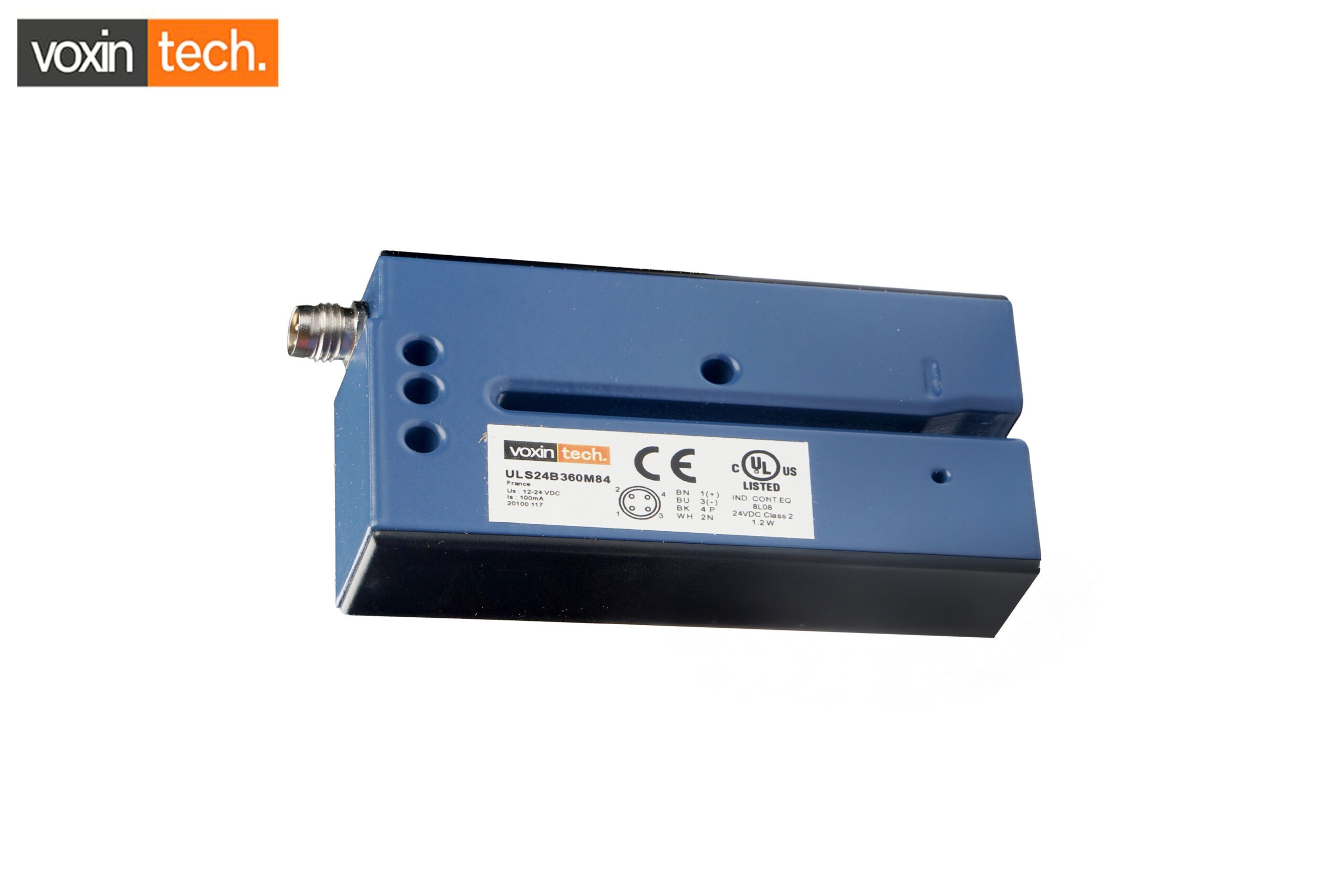
The ULS-24B-360-M84 is Voxintech’s flagship ultrasonic clear label sensor — engineered to detect transparent, clear, opaque, plastic, metallic, and BOPP labels on any backing material. As a direct manufacturer and supplier in India, Voxintech offers this sensor as a technically compatible, cost-effective alternative to market-leading brands including Leuze, Datalogic, Sick, Telemecanique (Schneider), and Omron — at competitive pricing with full technical support and same-day enquiry response.

Quick Reference — ULS24B360M84

Model: ULS24B360M84  ·  Technology: Ultrasonic  ·  Output: NPN / PNP — LO/DO Selectable  ·  Slot: 3 mm × 69 mm  ·  Frequency: 1,500 Hz  ·  Min. Label: 2 mm  ·  IP: IP65 / IP68  ·  Certs: CE · ATEX  ·  Origin: France


Technical Specifications

Parameter Specification
Model Number ULS24B360M84
Detection Technology Ultrasonic
Output Type NPNPNP Light Operate (LO) / Dark Operate (DO) — User Selectable
Slot Gap (Fork Width) 3 mm
Slot Depth 69 mm
Maximum Frequency 1,500 Hz
Minimum Label Length 2 mm
Minimum Gap Between Labels 2 mm
Sensing Distance 0 – 3 mm
Operating Temperature -20°C to +70°C
Connector M12 (4-pin)
Housing Painted Aluminium
Ingress Protection IP65IP68
Certifications CEATEX
Country of Manufacture France (Voxintech)

📄 Download Full Datasheet — ULS24B360M84 (PDF)


Voxintech ULS-24B-360-M84 — Compatible Alternative to Leading Brands

Many customers in India currently use ultrasonic clear label sensors from Leuze, Datalogic, Sick, Telemecanique, or Omron on their labelling machines. When these sensors require replacement, repair, or when customers are sourcing for new machines, the Voxintech ULS24B360M84 is a fully compatible and significantly more cost-effective alternative — manufactured to European standards, available directly in India, with no import delays.

Below is a complete cross-reference guide for each major brand and their specific models that the ULS24B360M84 can replace.

Note: Always verify connector type, mounting dimensions, and fork depth against your machine’s mechanical requirements before ordering a replacement. Contact Voxintech at info@voxintech.com for a free compatibility assessment for your specific labelling machine.

Leuze → Voxintech ULS24B360M84 Cross-Reference

Leuze GSU, IGSU & GSX Series Ultrasonic Fork Sensors — Compatible Voxintech Alternatives

LEUZE Leuze Electronic GmbH, Germany — GSU12, GSU14E, IGSU14E, GSX14E series ultrasonic fork sensors widely used in India for pharmaceutical and FMCG labelling machines.
Leuze Model Number Part No. Type Voxintech Alternative Compatible?
GSU14E/LGT.3-M12 50142875 Ultrasonic fork, M12, 10mm label ULS24B360M84 ✓ Yes
GSU14E/16T.3-M12 50142877 Ultrasonic fork, M12, 4mm label ULS24B360M84 ✓ Yes
GSU14E/16T.3-M12V 50142878 Ultrasonic fork, M12, 4mm label, IO-Link ULS24B360M84 ✓ Yes
IGSU14E/1WT.3-M12 50142872 Ultrasonic fork, M12, stainless steel ULS24B360M84 ✓ Yes
IGSU14E/1WT.3-M12V 50142873 Ultrasonic fork, M12V, stainless ULS24B360M84 ✓ Yes
IGSU14E/LWT.3-M12 50142870 Ultrasonic fork, M12, wide label ULS24B360M84 ✓ Yes
IGSU14E/LWT.3-M12V 50142871 Ultrasonic fork, M12V, wide label ULS24B360M84 ✓ Yes
GSU12/6GX.3-M12 50142879 Ultrasonic fork, compact GS12 series ULS24B360M84 ✓ Yes
GSU12/G6X.3-M12 50142880 Ultrasonic fork, compact GS12 series ULS24B360M84 ✓ Yes
GSU12/6G.3-M8 50145981 Ultrasonic fork, M8 connector ULS24B360M84 ⚠ Verify connector
GSX14E/LWT.3-M12 50142865 Combined optical + ultrasonic fork ULS24B360M84 ✓ Ultrasonic mode
GSX14E/LWT.3-M12V 50142866 Combined optical + ultrasonic fork ULS24B360M84 ✓ Ultrasonic mode
GSX14E/1WT.3-M12 50142867 Combined optical + ultrasonic fork ULS24B360M84 ✓ Ultrasonic mode
GSX14E/1WT.3-M12V 50142868 Combined optical + ultrasonic fork ULS24B360M84 ✓ Ultrasonic mode
GSU 14D/66D.3-S12 50126782 Ultrasonic fork, older GS14D series ULS24B360M84 ✓ Yes
GSU 14D/66D.31-S12 50126783 Ultrasonic fork, 10mm label gap ULS24B360M84 ✓ Yes

DATALOGIC Datalogic S.p.A., Italy — SRX3 series is the leading ultrasonic fork sensor for clear label detection globally. Widely used in Indian pharmaceutical and packaging industries.
Datalogic Model Number Part No. Type Voxintech Alternative Compatible?
SRX3-6-US-M8-PH 953171020 Ultrasonic fork, dynamic teach, PNP, M8 ULS24B360M84 ✓ Yes
SRX3-5-US-3-M12-PNH — Ultrasonic fork, static teach, PNP/NPN, M12 ULS24B360M84 ✓ Yes
SRX3-6-US-M8-PH-SV5242 — Ultrasonic fork, dynamic teach, PNP, special version ULS24B360M84 ✓ Yes
SRX3 (all variants) 953171xxx Ultrasonic fork clear label — full SRX3 range ULS24B360M84 ✓ Yes
SR21-IR 953151070 Optical fork sensor, IR, opaque labels only ULS24B360M84 ✓ Upgrade to ultrasonic
SRF-50-5-P — Optical fork, 50mm gap, PNP, M8 ULS24B360M84 ⚠ Verify fork depth
SRF-80-5-P — Optical fork, 80mm gap, PNP, M8 ULS24B360M84 ⚠ Verify fork depth

SICK SICK AG, Germany — WF series fork sensors and ultrasonic label sensors used in premium packaging and pharmaceutical lines across India.
Sick Model Number Part No. Type Voxintech Alternative Compatible?
WF15-40B410 — Ultrasonic fork, 1.1kHz, label detection ULS24B360M84 ✓ Yes
WF15-40B430 — Ultrasonic fork, label detection, IO-Link ULS24B360M84 ✓ Yes
WF2-40B410 6028428 Optical fork, 2mm width, 10kHz, infrared ULS24B360M84 ✓ Upgrade to ultrasonic
WTF12L-F270S30 — Ultrasonic label sensor, label detection ULS24B360M84 ✓ Yes
WFS3 series — Fork sensor, label gap detection ULS24B360M84 ⚠ Verify specs

TELEMECANIQUE / SCHNEIDER Telemecanique Sensors (Schneider Electric / Yageo Group), France — XUVU and XUVE series ultrasonic and optical label fork sensors. Widely distributed in India through Schneider Electric channels.
Telemecanique Model Series Type Voxintech Alternative Compatible?
XUVU04M3KSNM8 XUVU04 Ultrasonic fork, compact 20mm body, M8, IO-Link ULS24B360M84 ✓ Yes
XUVU06M3KSNM8 XUVU06 Ultrasonic fork, M8 4-pin, PNP+NPN ULS24B360M84 ✓ Yes
XUVU06M3PSNM8 XUVU06 Ultrasonic fork, M8, PNP NO/NC, 12–24V DC ULS24B360M84 ✓ Yes
XUVE04M3KSNM8 XUVE04 Optical fork, M8 4-pin, PNP+NPN ULS24B360M84 ✓ Upgrade to ultrasonic

OMRON Omron Corporation, Japan — E3U-GL series photoelectric and ultrasonic label sensors in fork-shape housing. Used in pharmaceutical and FMCG packaging lines in India.
Omron Model Number Series Type Voxintech Alternative Compatible?
E3U-GL11 2M E3U-GL Ultrasonic label sensor, fork shape, 2m cable ULS24B360M84 ✓ Yes
E3U-GL12 2M E3U-GL Ultrasonic label sensor, fork shape, connector ULS24B360M84 ✓ Yes
E3U-GL1 series E3U-GL Photoelectric/ultrasonic fork label sensor range ULS24B360M84 ✓ Yes

TRI-TRONICS & PEPPERL+FUCHS Tri-Tronics (USA) and Pepperl+Fuchs (Germany) — widely used in high-performance label detection and industrial sensing applications in India.
Brand & Model Series Type Voxintech Alternative Compatible?
LB series (Tri-Tronics) LB / LQ Ultrasonic clear label sensor, OLED display, stainless housing ULS24B360M84 ✓ Yes
SRX3 (Tri-Tronics) SRX High-speed clear label fork sensor ULS24B360M84 ✓ Yes
UC18GS series (P+F) UC Ultrasonic sensor with IO-Link, all material detection ULS24B360M84 ⚠ Different form factor

Brand-by-Brand Summary — Voxintech ULS24B360M84 Compatibility

Leuze

GSU14E · GSU12 · IGSU14E
GSX14E · GSU14D series
16 models covered. M12 connector match. Ultrasonic detection equivalent.
Datalogic
SRX3 (all variants)
SR21-IR · SRF series
Direct SRX3 replacement. 2mm gap detection identical. NPN/PNP selectable.
Sick
WF15 series · WF2-40B410
WTF12L · WFS3 series
Ultrasonic detection equivalent. Verify M12 mounting before ordering.
Telemecanique
XUVU04 · XUVU06M3KSNM8
XUVU06M3PSNM8 · XUVE04
Full XUVU ultrasonic range covered. Functional drop-in replacement.
Omron
E3U-GL11 · E3U-GL12
E3U-GL series
Fork-type ultrasonic label sensor — direct functional equivalent.
Tri-Tronics / P+F
LB / LQ series
SRX3 (Tri-Tronics)
Clear label ultrasonic detection equivalent. Competitive pricing.

Why Switch to Voxintech from Leuze, Datalogic, or Sick?

Factor Leuze / Datalogic / Sick Voxintech ULS24B360M84
Availability in India Through importers & multi-tier distributors — lead times of 4–12 weeks ✓ Direct from manufacturer — fast availability pan-India
Pricing High import duties + distributor margins = premium price ✓ Manufacturer-direct pricing — significantly lower cost
Technical Support Often via distributor with limited local knowledge ✓ Direct Voxintech engineering team — same-day response
GST Invoice Available but with complex import documentation ✓ Clean GST-compliant Indian invoice immediately
Manufacturing Quality European quality, CE/IP65 certified ✓ Same European quality — Made in France, CE/IP65/ATEX
Detection Technology Ultrasonic — detects all label types ✓ Ultrasonic — identical detection principle, same capability
Warranty 12–36 months, through distributor ✓ Manufacturer warranty with direct India support

Key Features & Applications

What the ULS24B360M84 Detects

  • Transparent & clear labels on clear backing tape — the primary use case where all optical sensors fail
  • Opaque paper and coloured labels — standard label detection applications
  • Plastic & BOPP film labels — common in food, cosmetic, and FMCG packaging
  • Metallic & foil labels — used in premium product labelling
  • Partially transparent labels — frosted, tinted, or semi-opaque label materials

Industries & Applications

  • Pharmaceutical labelling machines — clear labels on vials, bottles, ampoules, blister packs
  • FMCG & cosmetics — transparent label detection on shampoo, lotion, cream packaging
  • Food & beverage packaging — clear labels on water bottles, juice, sauce containers
  • Bottle labelling plants — high-speed label gap detection across all label types
  • Industrial automation — printing-and-apply, label dispensing systems
  • Medical diagnostics — clear label detection on sample tubes and reagent vials

Frequently Asked Questions

Q: Is the Voxintech ULS24B360M84 a direct replacement for the Leuze GSU14E?

A: Yes. The ULS24B360M84 uses the same ultrasonic fork detection principle as the Leuze GSU14E, with NPN/PNP output, M12 connector, IP65 protection, and 2mm minimum gap detection — the core functional parameters are equivalent. Contact us for a free technical compatibility assessment for your specific machine.

Q: Can the ULS24B360M84 replace a Datalogic SRX3 on my labelling machine?

A: In most applications, yes. The SRX3 and ULS24B360M84 both use ultrasonic technology, detect 2mm minimum label gaps, support NPN/PNP, and have comparable detection frequencies. The ULS24B360M84 is available at a significantly lower price with direct India supply. Please share your machine model for a confirmation from our team.

Q: My machine uses a Telemecanique XUVU06M3KSNM8. Can I use the ULS24B360M84 instead?

A: Yes. The XUVU06M3KSNM8 is an ultrasonic fork label sensor with M8 4-pin connector and PNP/NPN output. The ULS24B360M84 uses the same detection principle with M12 connector. For machines with M8 wiring, a standard M8-to-M12 adapter is available. Contact us to confirm compatibility with your specific wiring setup.

Q: Why is the Voxintech sensor cheaper than Leuze or Sick sensors in India?

A: Leuze, Sick, and Datalogic sensors are manufactured in Europe and imported to India through multi-tier distribution — each step adds import duty, freight, insurance, and distributor margin. Voxintech manufactures sensors in France to the same European standards and supplies directly to Indian customers, eliminating all intermediary costs. The quality and certifications are identical — the cost difference is purely distribution.

Q: Does Voxintech provide a technical datasheet for comparison with Leuze or Datalogic specs?

A: Yes. Download the full ULS24B360M84 datasheet from the link below and compare specifications directly with any Leuze, Datalogic, or Sick model. Contact our engineering team for a detailed spec comparison document.

📄 Download ULS24B360M84 Full Technical Datasheet (PDF)


Availability Across India

Voxintech supplies the ULS-24B-360-M84 directly to customers across all Indian states. Also available through IndustryPapa with online ordering, pan-India delivery, and GST-compliant invoicing.

North India : Delhi & NCR Noida · Gurugram · Faridabad · Ghaziabad West India Mumbai & Thane Navi Mumbai · Thane · Bhiwandi South India Bengaluru Karnataka — Electronics & Pharma Hub
South India: Chennai Auto · Pharma · Food Processing West India Pune & Nashik Pharma Manufacturing Belt
South India: Hyderabad Biotech · Bulk Drug Manufacturers
West India:  Ahmedabad & Surat Rajkot · Vadodara · Gujarat Industries East India Kolkata FMCG · Tea · Pharmaceutical Packaging
North India:  Chandigarh & Punjab Ludhiana · Amritsar · Pharma ClusterJaipur Textile · FMCG · Industrial Packaging Coimbatore & Cochin Textile · Spice · Pharma Industries
International
Global Supply:  UK · Germany · UAE · USA · Europe

Request a Quote or Compatibility Assessment

Looking to replace a Leuze, Datalogic, Sick, or Telemecanique label sensor? Contact Voxintech for a free compatibility check and competitive quotation.

📞 +91 9953039482  ·  ✉ info@voxintech.com  ·  🛒 industrypapa.com


Related: Label Sensors  ·  Ultrasonic Sensors  ·  Photoelectric Sensors  ·  IndustryPapa.com

Disclaimer: Brand names Leuze, Datalogic, Sick, Telemecanique, Schneider, Omron, Tri-Tronics, and Pepperl+Fuchs are trademarks of their respective owners. Model numbers are listed for cross-reference and compatibility guidance only. Voxintech has no affiliation with these companies. Always verify electrical and mechanical compatibility before replacing any sensor on production equipment.

ULS-24B-360-M84 for voxintech website.html Displaying ULS24B360M84 for voxintech website.html.