
IP65 vs IP67 Limit Switch: The Key Difference
Choosing between an IP65 and an IP67 limit switch comes down to one question: how much water will the switch face? Both ratings are fully dust-tight, so the deciding factor is whether your switch must survive water jets (IP65) or temporary immersion (IP67). Specifying the wrong one means either paying for protection you don’t need, or — worse — installing a switch that fails when moisture gets in. This guide makes the choice simple.
Understanding the IP Code
The IP (Ingress Protection) rating from IEC 60529 has two digits. The first describes protection against solids (dust), the second against liquids (water):
- First digit “6” — completely dust-tight (no dust ingress). Both IP65 and IP67 share this.
- Second digit “5” (IP65) — protected against low-pressure water jets from any direction.
- Second digit “7” (IP67) — protected against temporary immersion (up to 1 m deep, 30 minutes).
So the only difference between IP65 and IP67 is the level of water protection.
IP65 vs IP67 at a Glance
| Feature | IP65 Limit Switch | IP67 Limit Switch |
|---|---|---|
| Dust protection | Dust-tight | Dust-tight |
| Water protection | Low-pressure water jets | Temporary immersion (1 m / 30 min) |
| Withstands washdown | Light wash / splash | Heavy washdown |
| Survives submersion | No | Yes (temporary) |
| Typical environment | Dusty / splash-prone | Wet / immersion risk |
| Relative cost | Lower | Higher |
When to Choose an IP65 Limit Switch
Choose an IP65 limit switch when the environment is dusty or subject to splashing and rain, but not immersion:
- Outdoor gates, barriers, and parking systems
- Cement, mineral, woodworking, and metal-fabrication plants (high dust)
- Dusty warehouses and bulk material handling
- Agricultural machinery exposed to dust and rain
IP65 typically costs less, so if immersion is genuinely not a risk, it is the economical, correctly-specified choice.
When to Choose an IP67 Limit Switch
Choose an IP67 limit switch when the switch will be heavily washed down or may be submerged:
- Food, beverage, and dairy washdown lines
- Pharmaceutical and hygienic processing
- Water and wastewater treatment plants
- Car washes and cleaning systems
- Outdoor equipment in flood-prone or coastal locations
If there is any realistic chance of immersion or high-pressure washdown, IP67 is the safer specification.
A Simple Decision Rule
Ask: “Could this switch ever sit in standing water or be hosed at high pressure?”
- No, but it gets dusty/wet from splashing → IP65.
- Yes, immersion or heavy washdown is possible → IP67.
For protection beyond temporary immersion (continuous submersion), you would step up to IP68. For a complete selection framework covering actuator type, load, and mounting too, see our limit switch selection guide.
Why Source Sealed Limit Switches from Voxintech
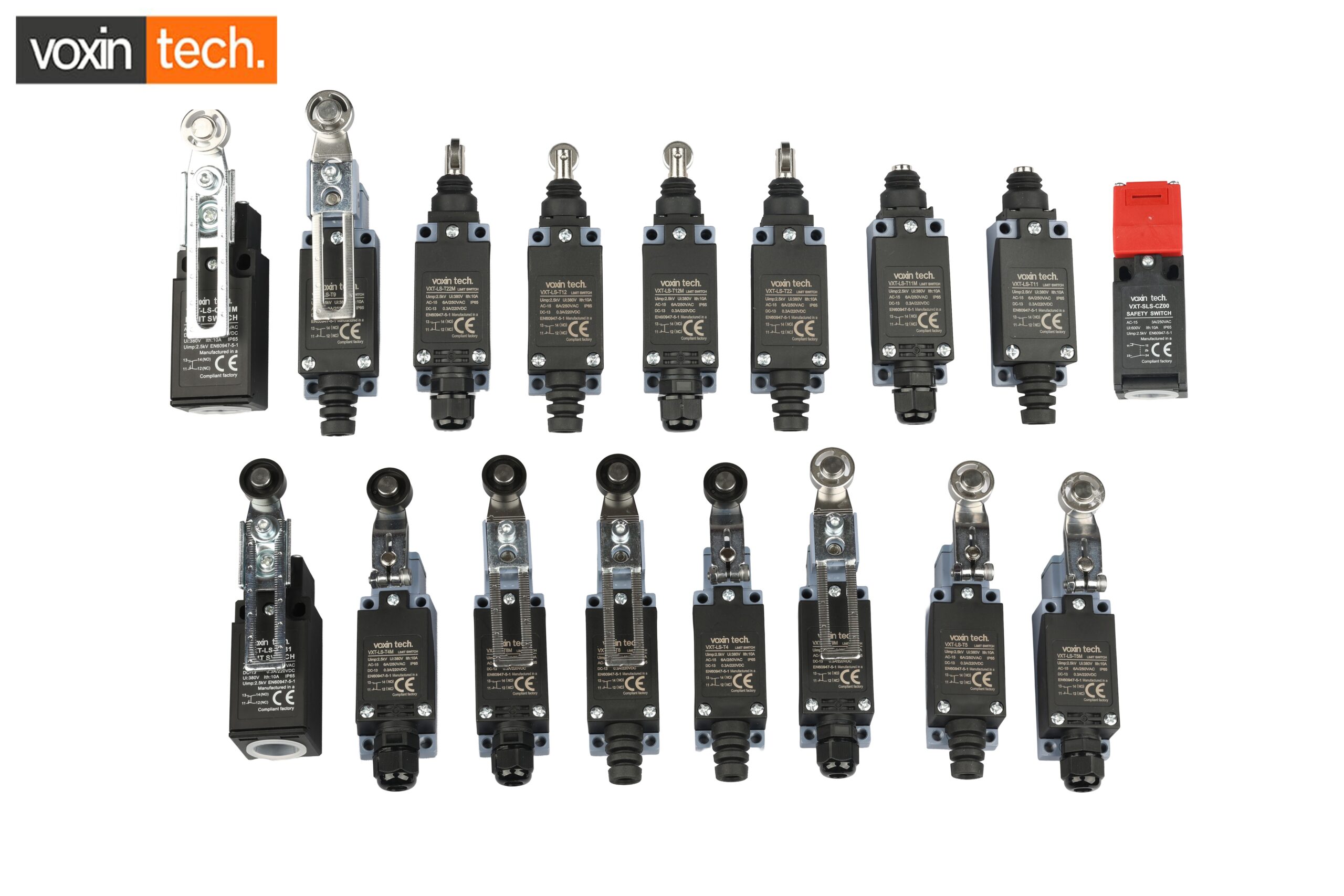
As a leading manufacturer and supplier of limit switches in India, Voxintech supplies both IP65 and IP67 limit switches in vertical, horizontal, and micro actuator styles to OEM machine builders and panel builders across India, from our Noida, Delhi NCR base. We help you confirm the correct sealing level for your environment so you pay for the protection you need — no more, no less — with ready stock and competitive pricing.
Not sure which rating fits your site? Send your environment details to Voxintech and we’ll recommend the right switch.
Frequently Asked Questions
What is the difference between IP65 and IP67 limit switches?
Both are completely dust-tight. IP65 protects against low-pressure water jets, while IP67 protects against temporary immersion in water up to 1 metre for 30 minutes. IP67 offers higher water protection.
Is IP67 better than IP65?
IP67 offers greater water protection, but “better” depends on the application. For dusty, splash-only environments, IP65 is correctly specified and more economical. For immersion or heavy washdown, IP67 is the right choice.
Can I use an IP67 limit switch where IP65 is specified?
Yes — IP67 exceeds IP65’s water requirement and is dust-tight, so it can be used in place of IP65, usually at a higher cost.
Are both IP65 and IP67 limit switches dust-proof?
Yes. Both carry a first digit of 6, meaning they are completely dust-tight. See our full range of limit switches for all available IP ratings.